


Digital Signage vs Printed Posters for Business

A restaurant changes its lunch special at 11 a.m. A retail store needs to promote a weekend sale. A medical office needs patients to notice a new check-in procedure. In each case, the question is not simply whether digital signage vs printed posters looks better. The real question is which format will communicate the right message, in the right place, for the right length of time.
Both options can be valuable business tools. Printed posters remain affordable, familiar, and highly effective for fixed messages. Digital displays offer movement, scheduling, and fast updates that can make a location feel current and responsive. The stronger choice depends on your audience, environment, budget, and how often your message changes.
Digital Signage vs Printed Posters: The Core Difference
Printed posters are physical graphics produced for a specific message. They may be mounted in frames, displayed in windows, installed on walls, placed on easels, or used as part of a retail or event display. Once printed, the message stays in place until someone replaces it.
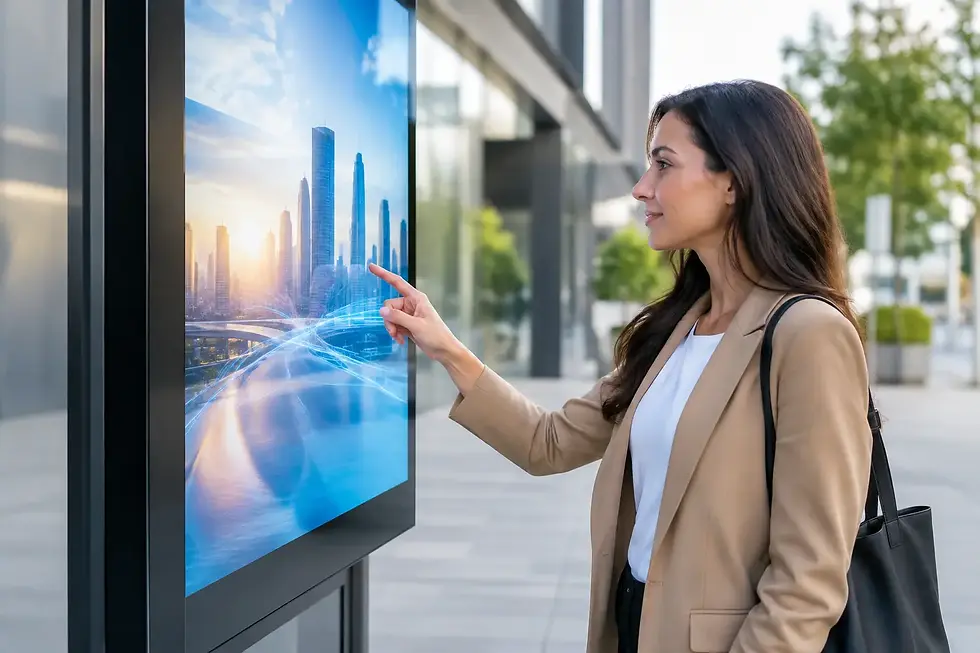
Digital signage uses screens to display programmed content such as slides, videos, menus, announcements, promotions, directories, or branded messages. Content can be changed from a computer or media player, often without visiting each display in person. One screen can carry many messages throughout the day.
That difference affects nearly every decision that follows. Posters are usually the simpler, lower-cost choice for a stable message. Digital signage is often more practical when information changes regularly or when a business needs to make better use of a limited amount of wall, window, or counter space.
When Printed Posters Make the Most Sense
A well-designed poster can do a great deal of work for a modest investment. For a grand opening, a seasonal event, a hiring campaign, a property listing, or a promotion with one clear call to action, print is often exactly what a business needs. It is immediate, tangible, and does not require power, software, internet access, or staff training.
Print also has an advantage in bright outdoor conditions. While display technology continues to improve, glare, direct sunlight, and viewing angle can affect a screen’s visibility. A properly selected printed graphic, banner, window decal, or rigid panel can remain readable in conditions where an indoor-rated screen would struggle.
For organizations that need many copies of the same message, posters can be especially efficient. A school fundraiser, community event, real estate open house, or multi-location promotional campaign may need graphics distributed quickly across numerous sites. Producing a coordinated print run is usually more economical than purchasing and installing screens at every location.
Printed posters also create a sense of permanence. A framed poster in a lobby, a mounted graphic in a leasing office, or a polished retail visual can reinforce a brand without competing for attention. Not every message needs animation. In fact, a clean, static graphic is sometimes easier to absorb in a quiet office, hallway, or waiting room.
The trade-off is replacement cost and labor. Every price change, date revision, menu adjustment, or campaign update requires a new print file, new production, and someone to install the replacement. For businesses that update messages frequently, those small recurring costs can add up.
Where Digital Signage Earns Its Investment
Digital signage is most valuable when time matters. A screen can promote breakfast in the morning, lunch at noon, and evening specials later in the day. A property management office can display leasing information, maintenance reminders, community announcements, and emergency notices from the same location. A retail business can feature new inventory without covering its walls with separate posters.
The ability to schedule content is one of the strongest reasons to choose digital. Instead of relying on staff to remember to swap graphics, businesses can plan messages in advance. This is useful for recurring promotions, changing menus, event countdowns, holiday hours, and internal communications.
Motion can also draw attention, particularly in spaces where people are walking past competing visual information. Short video, animated text, or rotating images can make a display more noticeable than a static poster. That does not mean every screen should play fast-moving content. Excessive motion can feel distracting or unprofessional. The best digital signage is purposeful, readable, and built around a clear message.
Digital displays can be a strong fit for businesses with several locations. With the right system, a marketing coordinator can maintain consistent branding and update content across multiple sites without ordering, shipping, and installing new materials each time. That consistency matters for growing retailers, healthcare groups, property operators, and service businesses.
The upfront investment is higher. A complete digital signage solution may involve commercial-grade screens, mounting, power, content setup, media players, software, networking, and installation. It also needs an ongoing content plan. A blank screen or outdated slide is not an asset. It is a missed impression in a place where customers expect useful, current information.
Compare the Real Cost, Not Just the First Invoice
A printed poster usually costs less at the start, but initial price is not the full calculation. Consider how long the message will be used and how many times it will change. A poster promoting a six-month service offering may deliver excellent value. A poster listing weekly specials may need replacement so often that a digital screen becomes more sensible over time.
Digital signage has higher setup costs, but its per-update cost can be low once the system is in place. The break-even point varies. It depends on the number of displays, how frequently content changes, whether staff can manage updates internally, and whether the screens serve revenue-producing messages such as menu upsells, retail promotions, or featured services.
Maintenance deserves a place in the budget as well. Printed graphics may fade, tear, curl, or become dated. Screens require cleaning, occasional service, and replacement over their useful life. Commercial displays are generally better suited to long operating hours than consumer televisions, particularly in public-facing installations. Selecting the right equipment and mounting method at the outset can prevent avoidable downtime later.
Match the Format to the Viewing Environment
Start with the location. Customers standing in line for several minutes can absorb a rotating digital message sequence. People walking through a corridor may only have a few seconds, making a simple, high-contrast poster or single screen message more effective. Drivers passing a storefront need large, immediate information, not a dense list of details.
Then consider lighting, distance, and traffic flow. A lobby screen may be viewed from across the room, while a counter card or poster may be read from two feet away. Screens and printed graphics both need the right size, contrast, typefaces, and placement to be useful. A message that is technically attractive but difficult to read does not generate business.
Content length matters, too. Posters work best when they communicate one main idea. Digital signage can support multiple messages, but each slide should still be concise. Trying to fit every product, service, phone number, and social message onto one screen usually weakens the result. Give customers one clear reason to take the next step.
A Combined Approach Often Works Better
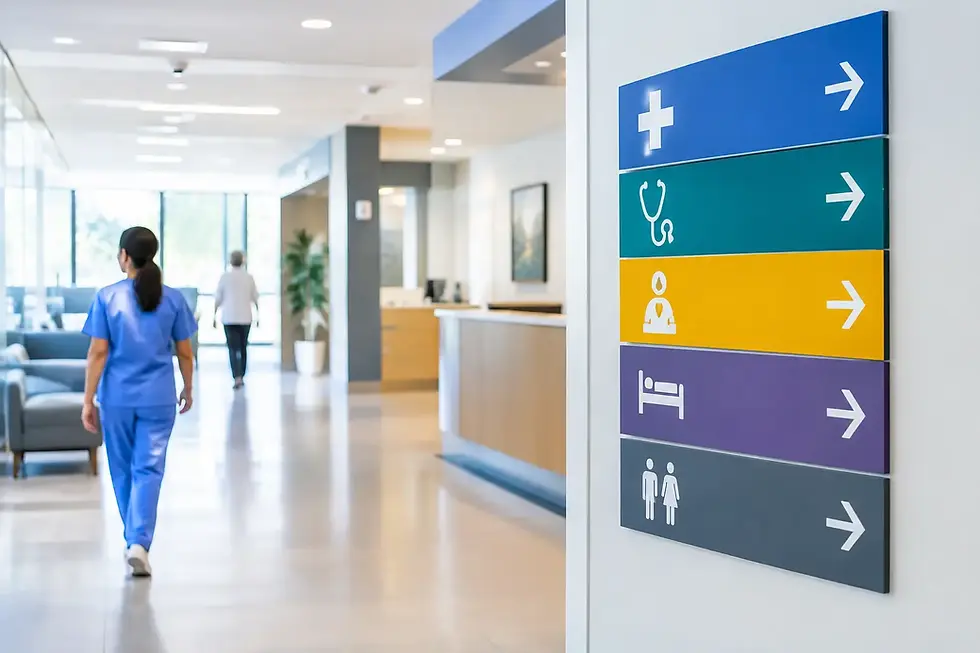
For many local businesses, this is not an either-or decision. A digital display can handle timely promotions, while printed signs establish permanent branding and help customers navigate the space. A restaurant may use menu boards or window graphics for core information and a screen for daily specials. A real estate office may rely on branded exterior signage and property riders while using a lobby display for active listings.
This blended approach creates visual consistency without forcing every message onto a screen. It also gives businesses a practical backup: permanent printed signs continue working if a display is being serviced, while digital content reduces the need to reprint short-term promotions.
At Econoline Signs, projects are evaluated as part of the full customer experience, not as isolated products. The right answer may be a polished poster system, a digital display, or a coordinated mix of permanent, printed, and electronic signage that fits how your customers actually move through the space.
Before choosing, write down the messages you expect to change over the next year. If the list is short, invest in durable printed signage that looks professional every day. If those messages change weekly, daily, or by time of day, a well-planned digital display may give your location more value from the same wall space.

Comments