


Digital Signage vs Static Displays: Which Fits?
- Steve Bourns

- Aug 1
- 6 min read
A restaurant updates its lunch special at 11 a.m. A medical office needs patients to find the right suite. A retail store wants a window display that still looks sharp after months of sun. In each case, the choice between digital signage vs static displays affects more than appearance. It affects how quickly you can communicate, what you will spend over time, and how reliably your sign supports the customer experience.
For many Santa Rosa and Sonoma County businesses, the best answer is not one format replacing the other. It is choosing the right sign for the job, then making sure it is designed, fabricated, and installed to perform where it matters.
Digital Signage vs Static Displays: The Core Difference
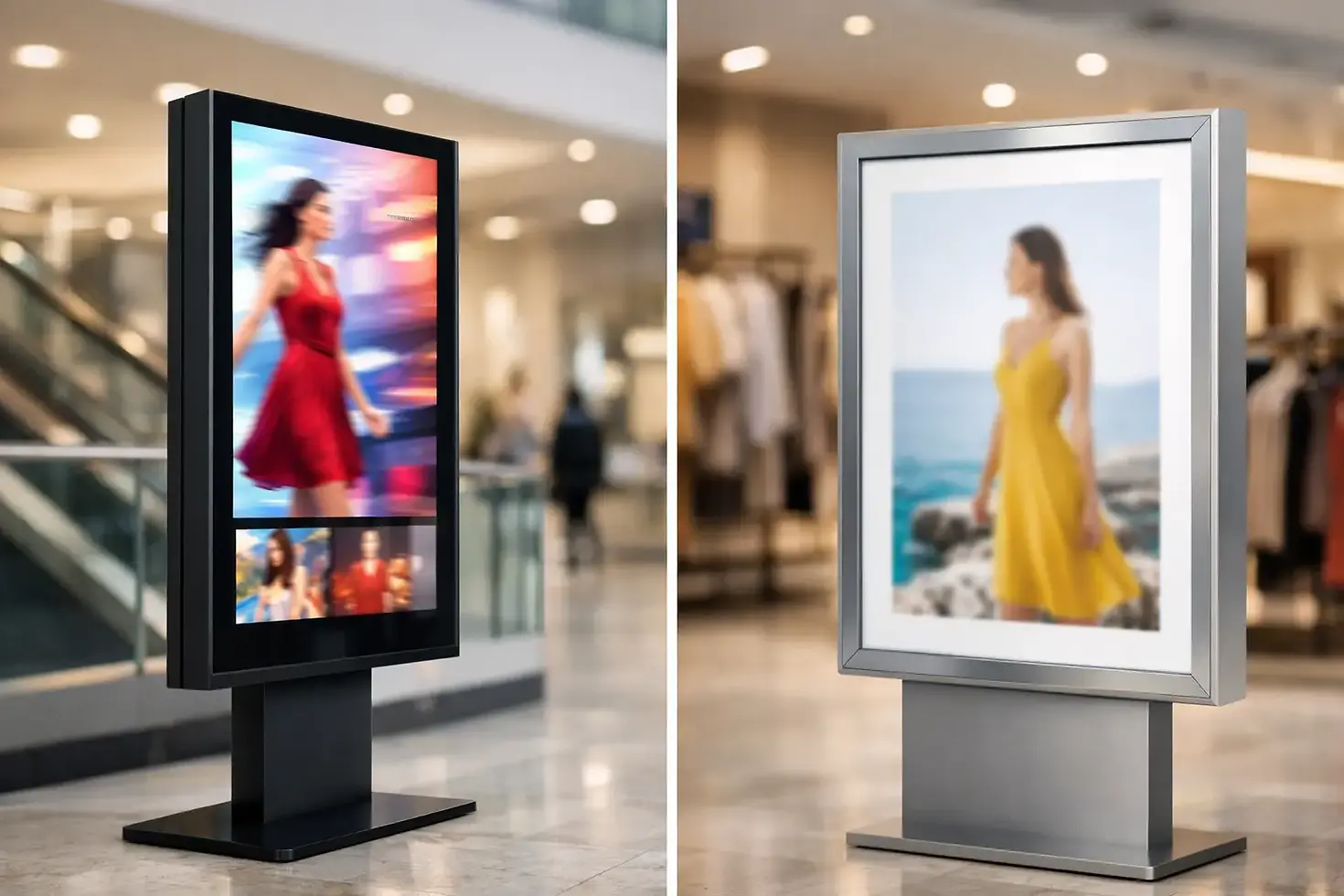
Static displays are fixed-message signs. They include channel letters, monument signs, dimensional lobby logos, window graphics, banners, wall graphics, directional signs, ADA signage, menu boards, and printed trade show displays. Once installed or printed, the message remains in place until the sign is replaced, revised, or reprinted.
Digital signage uses electronic screens to display changing content. A single display can rotate through promotions, announcements, menus, event schedules, videos, pricing, or wayfinding information. Content can be scheduled in advance and, depending on the system, updated from a computer or mobile device.
The practical distinction is simple: static signage delivers a consistent, always-on message, while digital signage gives a business the ability to change its message without producing a new physical sign each time.
That flexibility is valuable, but it is not automatically the best value. A well-made exterior sign can promote a business around the clock for years with minimal attention. A digital display may be the stronger tool when the message changes often enough to justify the equipment, content planning, and ongoing management.
When Static Displays Are the Better Business Investment
Static signage is often the foundation of a professional business presence. Your storefront identity, building identification, monument sign, and permanent wayfinding should be clear whether the power is on, the internet is working, or someone has remembered to update a playlist.
For exterior visibility, static signs are usually the more durable and cost-effective choice. Illuminated channel letters, cabinet signs, monument signs, and window graphics are built for a specific location and purpose. They establish who you are, help customers find you, and reinforce your brand every day.
Static displays also have strengths where compliance and clarity matter. ADA signs, room identification, exit signs, parking signs, and permanent directional signs need to be easy to read and dependable. A digital screen may supplement navigation in a large facility, but it does not replace required tactile or code-compliant signage.
Cost is another reason businesses choose static signage. The initial investment varies by size, materials, installation conditions, and illumination, but the long-term ownership costs are generally predictable. There is no software subscription, screen replacement cycle, or need for a staff member to manage changing messages.
Static signs are particularly effective when your message is stable: your business name, logo, hours, primary services, leasing information, or a long-running brand campaign. They are also a practical choice for outdoor settings with intense sunlight, difficult viewing angles, or exposure to weather. Quality materials and proper installation matter here. A sign is only inexpensive if it continues to look professional and function as intended.
Where Digital Signage Earns Its Keep
Digital signage is most useful when timing matters. A screen in a restaurant can shift from breakfast to lunch without replacing menu panels. A retail business can promote a weekend sale in the morning and feature a new product in the afternoon. An event venue can change schedules, sponsor recognition, and directional information as the day progresses.
It also allows one location to carry several messages. Instead of asking a customer to absorb a crowded poster, a display can show a focused sequence: first a promotion, then a product feature, then a call to action. When content is designed well, this can make communication more organized and more engaging.
For businesses with multiple locations, digital signage can support brand consistency. Centralized content can help a company use the same campaign language, colors, and approved visuals across several sites while still allowing local details such as store hours or event announcements.
However, a screen is not a set-it-and-forget-it sign. It needs purposeful content. A blank screen, outdated promotion, or rapidly changing slideshow can make a business look less attentive rather than more modern. Digital signage works best when someone owns the content calendar and understands what customers need to see first.
The display itself must also fit the environment. Indoor lobby screens and menu boards face different demands than outdoor LED displays. Brightness, viewing distance, mounting method, electrical access, ventilation, weather exposure, and local permitting can all affect the right solution and the real project cost.
Compare the Total Cost, Not Just the Purchase Price
A static sign often has a higher production cost when it involves custom fabrication, illumination, structural supports, or installation equipment. Yet once it is in place, its operating requirements are limited. Maintenance may include cleaning, lighting service, paint touch-ups, or occasional graphic replacement.
Digital signage can reduce the cost of frequent message changes, but it adds different expenses. Those may include commercial-grade displays, media players, mounting hardware, electrical work, software, internet access, content design, and future service. Consumer televisions are not always suited to commercial operating hours or public-facing installations, particularly in bright areas or locations where the screen will run all day.
The right comparison depends on how often your message changes. If a promotion changes four times a year, printed graphics or interchangeable panels may be more economical and easier to manage. If pricing, inventory, schedules, or daily specials change every week, digital signage may save time and reduce recurring production costs.
Think about the cost of missed communication as well. A property manager may benefit from a digital directory or tenant announcement screen in a busy lobby. A contractor's jobsite banner may need only a clear, durable static display with a phone number that can be read from the road. Both are sound investments when matched to the job.
Visibility and Readability Still Come First
Whether a sign is electronic or printed, customers must be able to understand it quickly. The strongest sign programs begin with viewing conditions: How far away is the audience? Are they walking, driving, or waiting in line? What information do they need at that moment? What competes for their attention?
Digital content often fails when it tries to say too much. Small type, too many slides, low-contrast colors, and fast motion can reduce readability. The same principle applies to static signs. A beautiful layout that cannot be read from the street is not doing its job.
Keep primary messages brief. Use type sizes appropriate to the viewing distance. Build sufficient contrast between text and background. For digital displays, give each message enough screen time to be read naturally. For permanent signs, prioritize the information that helps a customer identify, locate, or act.
A coordinated sign system can use both formats without creating visual clutter. A monument sign might establish the property identity outdoors, while a digital display inside shares current tenant notices. A retail storefront may use permanent channel letters for recognition and a screen or window graphic for short-term offers. The fixed elements protect brand consistency; the changing elements keep communication timely.
A Practical Way to Make the Decision
Start with the message, not the technology. Ask how often it will change, where people will see it, how long it needs to last, and who will be responsible for updates. Then consider the location's physical conditions, applicable codes, electrical requirements, and budget over the expected life of the sign.
Static displays are usually the right choice for permanent identity, exterior visibility, code-required information, and messages that change infrequently. Digital signage is often worth considering for menus, event schedules, promotional campaigns, internal communications, waiting areas, and locations where several messages need to rotate.
There are also middle-ground options. Changeable letter boards, replaceable banner systems, framed poster inserts, interchangeable panels, and window graphics can provide flexibility without the cost and technical requirements of a digital display. These are especially useful for businesses that need occasional updates but do not need daily content changes.
At Econoline Signs, the goal is to help clients choose signage that works in the real conditions of their business, not simply sell the newest format. That includes considering design, fabrication, installation, permitting, and long-term maintenance before a sign is produced.
The sign that serves you best is the one your customers can understand at a glance and your team can maintain with confidence. Put your permanent brand message where it will work every day, then add changeable communication only where it gives your business a clear practical advantage.


Comments