


Custom Business Signs With Logo That Work

A sign gets judged fast. Drivers see it in seconds, pedestrians notice it in passing, and first-time visitors often decide whether a business feels established before they ever open the door. That is why custom business signs with logo are more than a branding extra. They are often the first proof that your business is professional, visible, and ready to serve.
For business owners and property managers, the real question is not whether to include a logo on a sign. It is how to turn that logo into a sign system that actually does its job - attracting attention, reinforcing your brand, helping people find their way, and holding up over time.
Why custom business signs with logo matter
A good logo sign does two things at once. It identifies your business clearly, and it makes that identity feel consistent wherever customers encounter you. If your storefront sign, lobby sign, window graphics, vehicle graphics, and directional signs all look disconnected, the brand feels weaker than it should.
When signage is custom-built around your logo, your colors, typography, spacing, and overall visual style stay aligned. That consistency matters more than many businesses realize. It helps customers remember you, it makes a location look more established, and it supports confidence before a conversation even begins.
There is also a practical value. Signage is one of the few advertising assets that works every day without ongoing media spend. A well-made exterior sign promotes your business during business hours, after hours, weekdays, weekends, and through changing seasons. Done right, it becomes one of the most cost-effective impressions you can buy.
A logo alone is not enough
Many companies already have a logo file and assume the hard part is over. In reality, a logo that looks good on a business card or website header does not always translate cleanly to a monument sign, channel letters, or window graphic.
This is where experience matters. Some logos need simplification to stay readable at a distance. Fine lines may disappear. Color combinations that work on screen may lose contrast outdoors. A horizontal layout might fit one application and fail in another. The goal is not to change your brand. The goal is to adapt it so the sign performs in the real world.
That performance depends on viewing distance, installation height, lighting, surrounding buildings, traffic speed, and even the angle from which people approach the site. A sign for a downtown storefront has different demands than signage for an office park, medical building, retail center, or event venue.
Choosing the right type of logo sign
The best custom business signs with logo are matched to the setting, not picked from a one-size-fits-all approach. Exterior building signs are usually the top priority because they create the first impression and help people find the business quickly. Depending on the property and local requirements, that might mean dimensional letters, channel letters, a cabinet sign, or a panel sign.
Monument signs work well for businesses set back from the road or located in multi-tenant developments. They provide visibility earlier in the customer journey, before a visitor reaches the building. Window graphics can support the main sign by repeating logo elements, displaying hours, or adding temporary promotions without changing the core identity.
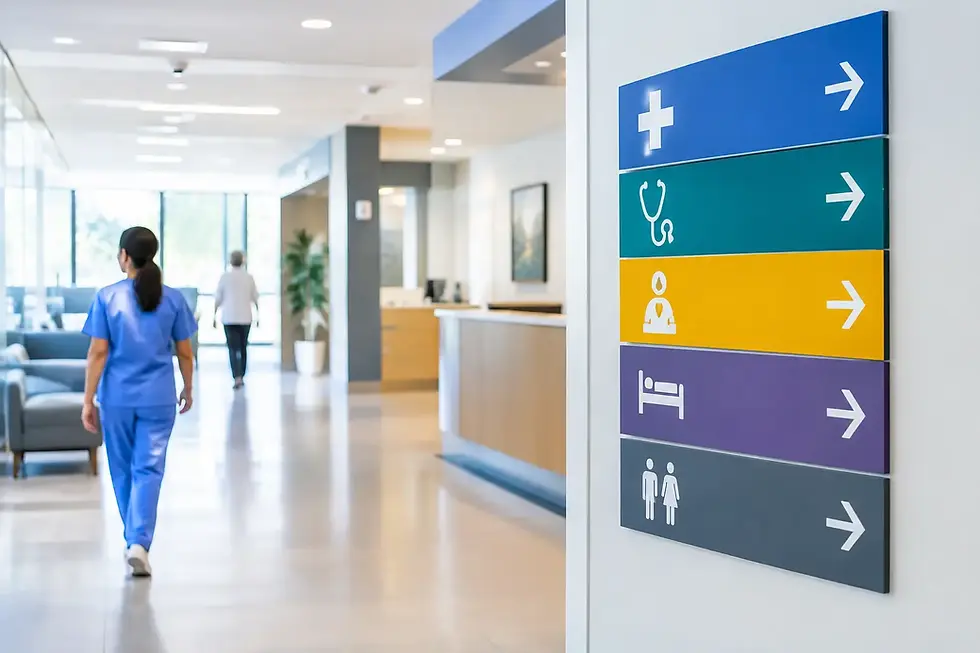
Inside the building, lobby and reception signs carry the brand forward. They tell customers they are in the right place and make the business feel polished. ADA and wayfinding signage can also reflect the overall brand while still meeting accessibility and code requirements. For companies with service vehicles, adding the logo to fleet graphics extends brand recognition far beyond the building itself.
The right answer is often a coordinated package rather than a single sign. That does not mean every business needs every format. It means the strongest results usually come from thinking about the whole customer experience instead of one sign in isolation.
Design choices that affect results
A logo sign should look good, but appearance is only part of the job. Readability comes first. If the business name or logo mark cannot be understood quickly, the sign is not working hard enough.
Scale is a common issue. Some businesses try to fit too much information into one sign, especially when they want to include a logo, tagline, phone number, website, and service list. In most cases, less is better. The main message should be immediately clear. Additional details can live elsewhere, such as on windows, directories, printed materials, or digital channels.
Color contrast matters just as much. Brand colors are important, but they have to remain legible in daylight, shade, and nighttime conditions. Materials also change the visual effect. Acrylic, aluminum, routed HDU, vinyl, illuminated faces, and dimensional lettering all create a different finish and different level of durability.
Lighting is another decision that depends on use. Illuminated signs increase visibility after dark and can be essential for retail, hospitality, healthcare, and other businesses with early or late operating hours. For some locations, non-illuminated signage may be fully adequate, especially if the site has good ambient lighting or limited nighttime traffic. It depends on your hours, location, and how customers approach the property.
Durability is part of the brand
A worn, faded, or damaged sign does not just look old. It can make the business appear neglected. That is why material selection and fabrication quality matter from the beginning.
Northern California businesses have to think about sun exposure, wind, moisture, and the simple wear that comes from years of use. A sign should be built for those conditions, not just for the day it is installed. Better fabrication usually means cleaner finishes, stronger structural integrity, and fewer problems down the road.
There is always a budget conversation, and that is reasonable. Not every project needs the most elaborate materials or the most complex lighting package. But cutting too far can create expensive problems later - replacements, repairs, visibility issues, or branding that no longer reflects the quality of the business. A sign is a long-term asset, so the better question is often value over time, not just upfront price.
The process should be straightforward
For many buyers, the hardest part of signage is not choosing colors or materials. It is figuring out who handles what. Design, fabrication, permits, installation, and maintenance can quickly become complicated when multiple vendors are involved.
A full-service sign partner simplifies that process. It starts with understanding the site, the brand, the purpose of the sign, and any property or municipal restrictions. From there, design development should balance branding with readability, budget, and code considerations. Production should reflect the approved design accurately, and installation should be handled safely and professionally.
That end-to-end approach is especially valuable for multi-location businesses, property owners, and organizations with recurring signage needs. It creates consistency and saves time because the sign company already understands the brand standards, the site conditions, and the expectations for execution.
For clients in Santa Rosa and the surrounding area, local knowledge also helps. Sign requirements can vary by jurisdiction, by landlord, and by property type. Working with a team that knows the region can reduce delays and help avoid surprises.
When to update your logo signage
Sometimes a business needs a completely new sign because it is opening, moving, or rebranding. Other times, the need is less obvious. If your current sign is hard to read, visually outdated, damaged, inconsistent with your current branding, or no longer effective from the street, it may be costing you more than you think.
A refresh does not always require starting from scratch. In some cases, updating faces, vinyl, paint, lighting, or specific branded elements can improve performance without replacing the full structure. In other situations, a full redesign is the smarter long-term move. The right path depends on the age of the sign, the condition of the materials, and what you want the business to communicate now.
What a strong sign says before anyone walks in
Custom logo signage sends a message long before your staff has a chance to do it in person. It tells people whether your business is easy to find, whether your brand feels consistent, and whether you pay attention to details. That message matters for retailers, offices, contractors, healthcare providers, real estate professionals, event organizers, and just about any organization with a physical presence.
At Econoline Signs, Inc., that is the practical value behind custom signage. A well-made sign is not decoration. It is a working business asset that builds visibility, supports trust, and keeps representing your brand day and night.
If you are considering new signage, start with the basics: where the sign will live, who needs to see it, how far away they will be, and what you want them to understand in a glance. The best sign decisions usually come from that simple question - what should this sign do for the business every single day?


Comments