


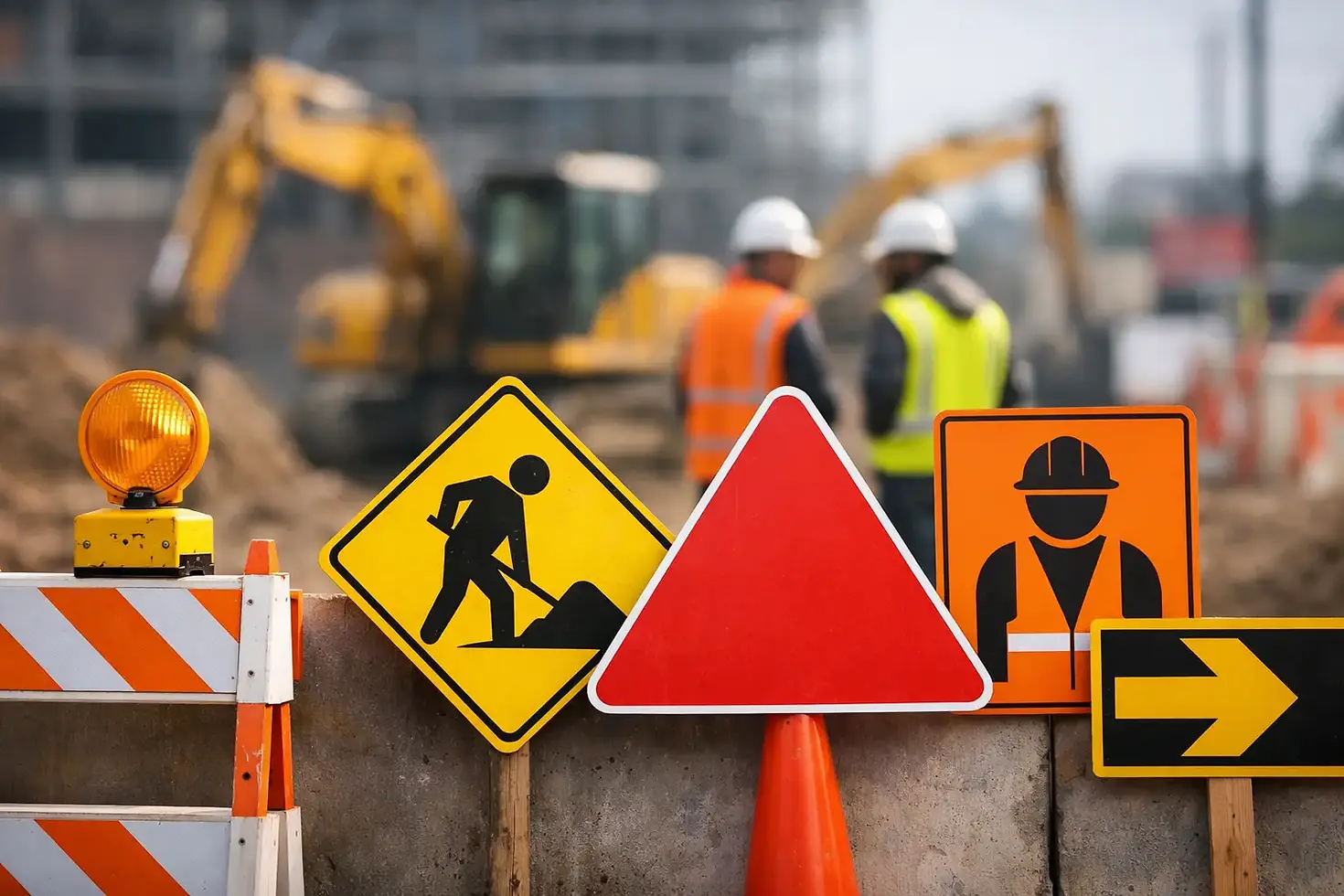
Best Construction Signage for Safer Job Sites

A construction site can change by the hour, but the need for clear communication does not. The best construction signage helps workers, visitors, delivery drivers, inspectors, and neighbors understand where to go, what to avoid, and who is responsible for the work. It also gives a project a more organized, professional presence from the first day of site preparation through final turnover.
For contractors and property owners, signs are not an afterthought to install once the work begins. They are part of site planning. The right mix reduces confusion at the gate, supports safety procedures, protects the public, and keeps a company name visible on a project that may be underway for months or years.
What Makes Construction Signage Effective?
Effective construction signs do more than put words on a panel. They are easy to notice, easy to read quickly, suited to their location, and built to withstand the conditions around them. A beautifully designed sign that cannot be read from the road, or a low-cost banner that tears apart in wind and rain, is not serving the project.
The first consideration is purpose. A public-facing construction site needs different signs than an active interior renovation. A large commercial development may need entrance signs, traffic direction, parking instructions, jobsite rules, contractor identification, and temporary branding. A smaller tenant improvement project may need only clear safety notices, a project identification sign, and directional signs for deliveries.
Legibility is equally important. Drivers approaching a site need larger type and fewer words than pedestrians standing at a gate. High-contrast colors, simple layouts, and recognizable symbols help people understand the message without stopping to study it. When a sign must communicate a rule, the rule should be direct: "Hard Hats Required," "No Public Entry," or "Deliveries Check In Here."
Material selection matters because construction environments are demanding. Dirt, sunlight, rain, wind, equipment movement, and frequent site changes can quickly damage poorly chosen materials. Coroplast can be a practical, economical option for short-term notices. Aluminum panels offer a more durable choice for long-running projects and permanent site information. Vinyl banners work well for large project identification or perimeter messaging when they are properly finished and installed. The best choice depends on the expected duration, exposure, mounting method, and budget.
The Best Construction Signage Starts With Safety
Safety signs should be treated as working tools, not decoration. They reinforce site expectations every day, especially for new subcontractors, visitors, and vendors who may not know the layout or hazards of a particular jobsite.
Required safety and compliance signage varies by project, jurisdiction, and condition. Contractors should confirm the applicable requirements for workplace safety, building permits, fire access, accessibility, traffic control, and public notification. A qualified sign partner can produce the signs, but the project team should provide approved wording and determine where signs must be placed.
Common safety messages include personal protective equipment requirements, restricted-access notices, emergency contact information, evacuation routes, first-aid locations, overhead hazard warnings, and equipment traffic alerts. On larger sites, signs should also identify muster points and help emergency responders locate the appropriate entrance.
Placement is often where good safety signage succeeds or fails. A notice hidden behind parked equipment is not useful. A gate rule posted only on the inside of the gate does not help a visitor before entry. Install signs where the decision happens: at entrances, pedestrian transitions, truck routes, stairwells, temporary fencing, and areas where site conditions change.
Because job conditions evolve, safety signage needs regular review. If a pedestrian path moves, the signs must move with it. If a new excavation, loading area, or temporary entrance opens, the site plan should be updated before confusion becomes a hazard.
Project Identification Signs Build Confidence
Construction projects are visible proof of a contractor's work. A well-made project sign tells the public that the site is active, managed, and accountable. It can identify the owner, general contractor, architect, project team, expected completion date, and contact information where appropriate.
For general contractors, this is an opportunity to make a durable advertising impression. A project identification sign is seen repeatedly by neighbors, commuters, prospective clients, and trade partners. Unlike a brief digital ad, it remains visible throughout the workday. Clear branding, consistent logo use, and professional fabrication make that impression count.
There is a balance to strike. The sign should promote the contractor and project team without becoming cluttered. Too many logos, phone numbers, and messages create visual noise. A strong layout gives the project name and primary contractor identity room to stand out, then organizes secondary information in a logical hierarchy.
Temporary fence banners can extend that visibility across a larger perimeter. They are especially useful on sites near busy roads, retail centers, or public gathering areas. On the other hand, a permanent-looking aluminum sign on posts may be the better investment for a long-duration development where durability and presentation are priorities.
Wayfinding Keeps Work Moving
A few directional signs can save a surprising amount of time on an active jobsite. Delivery drivers need to know where to enter, where to stage, and who to contact. Visitors need a clear route to the trailer or check-in point. Workers need to find parking, restrooms, material storage, and approved pedestrian paths without crossing equipment zones.
The most effective wayfinding uses a consistent system. If truck routes are marked in one color and pedestrian routes in another, keep that treatment consistent throughout the site. Use short messages and directional arrows that are large enough to see from the relevant distance. Avoid relying on handwritten signs for anything that will remain in place or affect safety.
Consider the full arrival experience. A driver may first see the site from a public street, then choose an entrance, stop at a gate, locate a trailer, and leave through a separate exit. Each sign should answer the next likely question. This approach is more useful than placing signs only where a problem has already occurred.
Choose Signs for the Project Timeline
Not every construction sign needs the same level of permanence. Spending heavily on a sign that will be discarded in two weeks may not make sense. Choosing the cheapest material for a two-year project usually creates replacement costs and a poor appearance.
For short-term notices, lightweight rigid panels and printed temporary signs are often appropriate. For several months of outdoor use, weather-resistant banners or more durable rigid substrates may offer better value. For long-term developments, aluminum signs, post-and-panel systems, dimensional project branding, and professionally installed site signs can hold up better and present a stronger image.
Installation deserves attention, too. Signs on temporary fencing require secure mounting that will not sag or become a wind hazard. Freestanding signs need suitable posts, foundations, or weighted bases. Interior construction signs may need to be removable without damaging finished surfaces. A full-service sign company can help evaluate these practical details before production begins.
A Practical Sign Plan for Every Jobsite
The best results come from planning signage before the site becomes busy. Start with a simple site map and identify public access points, worker entry, delivery routes, parking, office trailers, emergency equipment, and restricted zones. Then separate the signs into three priorities: required safety or permit signage, operational wayfinding, and project branding.
Before ordering, confirm who approves copy and logos, what signs must meet specific regulatory standards, and how often the site layout is likely to change. This avoids producing a large run of signs that becomes outdated after the first phase. It also helps establish a realistic budget based on the signs that carry the greatest safety and operational value.
Econoline Signs works with Northern California contractors, property owners, and project teams to produce site signs that fit real-world conditions, from durable project identification panels to banners, directional signs, and branded construction graphics. The goal is not simply to print signs. It is to give every person arriving at the site clear information and a confident first impression.
A well-marked site feels managed before anyone steps out of a vehicle. When safety notices, directions, and project branding are clear from the start, your team can spend less time answering basic questions and more time moving the work forward.


Comments